
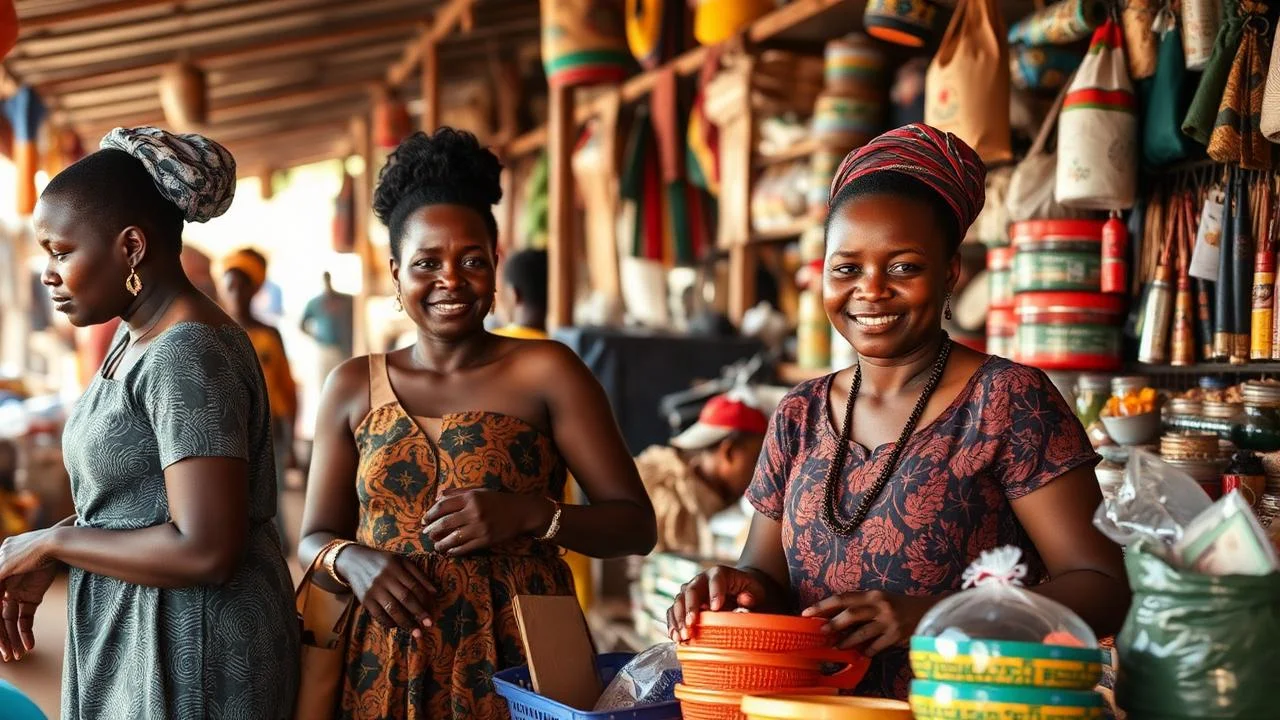
Walk through any market in Accra, Kumasi, or Tamale and you’ll see the power of women in action. Women traders, women farmers, women artisans — they are the backbone of Ghana’s economy. Across Africa, women account for a significant share of all entrepreneurs, and their businesses feed families, employ neighbours, and drive community development.
Yet despite their importance, women entrepreneurs in Africa often operate with less support than their male counterparts. They have less access to credit, fewer business networks, limited training opportunities, and face cultural barriers that men rarely encounter. This isn’t just unfair — it holds back entire economies.
When women succeed in business, the benefits spread far beyond the individual. Research consistently shows that women reinvest a larger share of their earnings in their families and communities — in education, healthcare, nutrition, and housing. Supporting women entrepreneurs isn’t charity — it’s one of the smartest investments any society can make.
At Resfind, we’ve seen this first-hand through our work with organisations like IGED-Africa, which promotes gender equality and women’s empowerment across Ghana. The transformation that happens when women are given equal opportunities is remarkable — not just for the women themselves, but for their families, their employees, and their communities.
Breaking Down Barriers to Finance
Access to money is the single biggest challenge facing women entrepreneurs in Ghana and across Africa. Banks and financial institutions often require collateral that women don’t have — land titles, property deeds, or formal business registrations that many women-owned businesses lack.
But the landscape is changing. Mobile money — which Ghana has embraced more enthusiastically than almost any country in Africa — is opening up new possibilities. Women can now save, send money, receive payments, and even access microloans through their phones, without needing a traditional bank account.
Village Savings and Loans Associations (VSLAs) remain one of the most powerful financial tools for women in rural Ghana and across Africa. These community-based groups allow women to save together, lend to each other, and build financial skills — all without the formality and intimidation of a bank.
If you’re a woman entrepreneur looking for funding, explore all your options. Government programmes like the Ghana Enterprises Agency offer support specifically for women-owned businesses. Many international development organisations run women-focused enterprise programmes. And don’t overlook the power of starting small — many of Ghana’s most successful businesswomen started with very little capital but grew steadily through careful reinvestment.
Building Confidence and Leadership Skills
Many women in Ghana and across Africa have the skills and ideas to build successful businesses, but lack the confidence to take the leap. This isn’t a personal failing — it’s the result of growing up in environments where women’s ambitions are often discouraged or dismissed.
Building confidence starts with surrounding yourself with supportive people. Join women’s business groups, attend networking events, and connect with other women entrepreneurs who understand your journey. In Ghana, organisations like IGED-Africa, the Women in Business Network, and various regional women’s groups provide spaces where women can learn, share, and grow together.
Mentorship is incredibly powerful. If you can find a woman who has successfully built a business in your area, ask her to mentor you. Most successful businesswomen are generous with their time and knowledge because they remember what it was like to start out. And if you are that successful woman, consider mentoring someone else — the impact you can have on another woman’s life is immeasurable.
Don’t underestimate the value of training. Even short courses on topics like financial management, marketing, negotiation, and leadership can make a dramatic difference in how you run your business. Many of these courses are available for free or at low cost through government agencies, NGOs, and online platforms.
Creating Support Systems That Work
Women entrepreneurs don’t just need money and training — they need support systems that acknowledge and address the unique challenges they face. This includes childcare, because when a mother can’t work because she has no one to look after her children, her business suffers.
In many Ghanaian communities, informal childcare networks already exist — extended family members, neighbours, and community members who help look after children. But these networks can be strengthened and formalised. Some women’s business groups in Ghana have started providing childcare during meetings and training sessions, which dramatically increases attendance.
Digital tools and mobile technology are also game-changers. Women who can’t leave their homes or market stalls to attend training can learn through their phones. Online business communities allow women to share advice, find customers, and support each other from anywhere in the country.
At Resfind, we design our support programmes with these realities in mind. We offer flexible scheduling, practical content that can be applied immediately, and follow-up support that helps women implement what they’ve learned. We know that a training programme is only valuable if it leads to real change in how women run their businesses.
The Role of Men in Supporting Women’s Empowerment
Gender equality is not just a women’s issue — it’s everyone’s issue. Men have a crucial role to play in supporting women’s economic empowerment, both in the workplace and in the home.
In the workplace, male leaders can champion women’s advancement by ensuring fair promotion practices, equal pay, and inclusive decision-making. They can speak up when they witness discrimination or harassment. They can mentor women colleagues and create opportunities for women to take on leadership roles.
At home, men who share household and childcare responsibilities enable their partners to pursue business opportunities and career growth. This isn’t about doing women a favour — it’s about building equal partnerships where both people can reach their potential.
In many Ghanaian communities, traditional attitudes about gender roles are slowly changing as people see the benefits of equality. Men who support their wives’ and daughters’ business ambitions often find that the whole family benefits — more income, better education for children, stronger family bonds, and greater respect in the community.
At Resfind, we include men in our gender equality programmes because we know that lasting change requires everyone’s involvement. The most successful organisations and communities we’ve worked with are the ones where men and women work together as true partners.
Looking Ahead: The Future of Women in African Business
The future is bright for women entrepreneurs in Ghana and across Africa. More women than ever are starting businesses, pursuing education, entering traditionally male-dominated industries, and taking on leadership roles. The African Continental Free Trade Area (AfCFTA) is creating new opportunities for cross-border trade that women can take advantage of.
Technology is levelling the playing field in ways that weren’t possible even five years ago. Women can now reach customers across the country and across the continent through social media, e-commerce platforms, and mobile payments. Digital skills are becoming the new currency of business success, and women are learning them fast.
But there’s still a long way to go. Progress won’t happen automatically — it requires intentional effort from governments, businesses, NGOs, communities, and individuals. Every woman who starts a business and succeeds makes it easier for the next one. Every organisation that promotes gender equality raises the standard for its industry.
At Resfind, we’re committed to supporting women’s economic empowerment through our consulting, training, and advisory work. We partner with organisations like IGED-Africa because we believe that gender equality isn’t just a programme area — it’s fundamental to the kind of Africa we want to help build.