
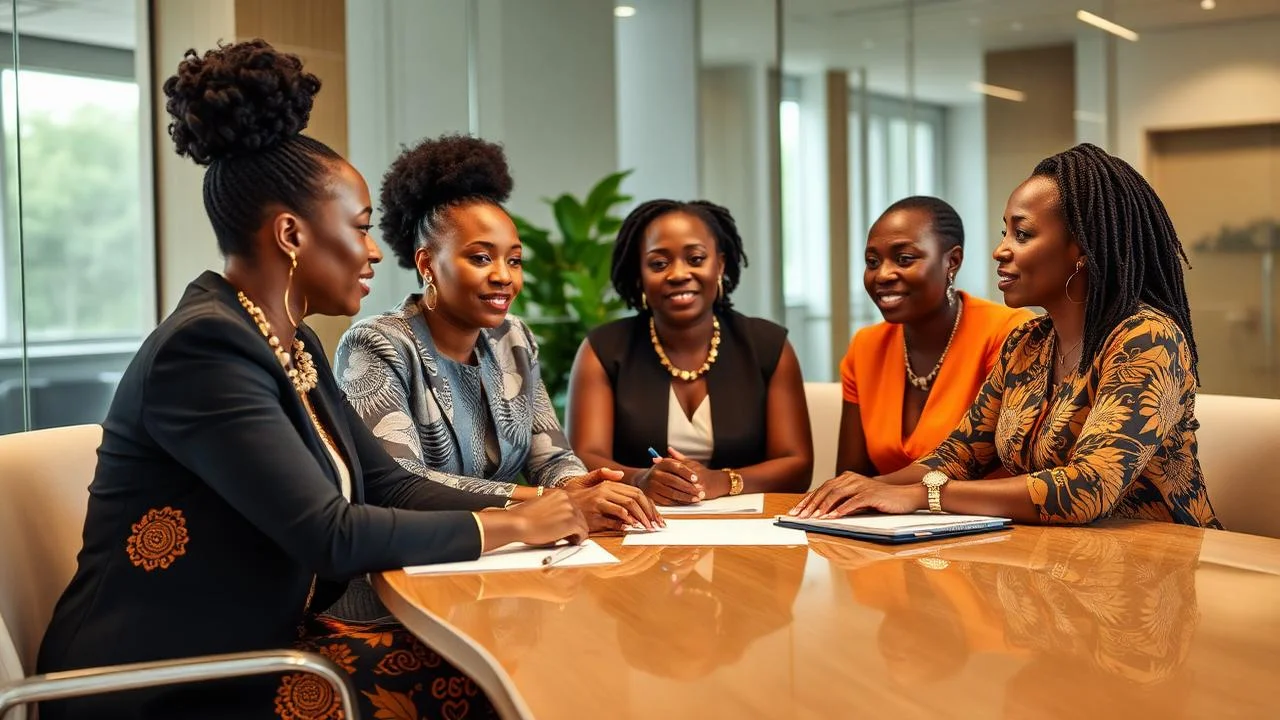
Across Ghana and Africa, women make up a huge portion of the workforce — running market stalls, teaching in schools, nursing in hospitals, managing offices, and leading organisations. Yet in many workplaces, women still face barriers that limit their potential: unequal pay, fewer promotion opportunities, exclusion from decision-making, and sometimes outright harassment.
This isn’t just unfair — it’s wasteful. When talented women are held back, the whole organisation loses out. Research from across the world, including studies focused on Africa, consistently shows that companies and organisations with more women in leadership positions make better decisions, manage risk more effectively, and achieve stronger financial results.
Gender equality doesn’t mean treating everyone the same regardless of their circumstances. It means giving everyone a fair chance to succeed. It means recognising that women often face additional challenges — caring responsibilities, cultural expectations, safety concerns — and creating an environment where those challenges don’t become career barriers.
For organisations in Ghana, embracing gender equality also sends a powerful message to clients, partners, and donors. Many international funders and development agencies now assess gender practices before awarding grants. Investors increasingly look at diversity as a sign of good governance. Being ahead on gender equality isn’t just moral — it’s strategic.
Understanding the Barriers Women Face in African Workplaces
To create real change, you first need to understand what women in your organisation actually experience. In many Ghanaian workplaces, the barriers aren’t always obvious. Sometimes they’re built into the culture — the assumption that men are natural leaders, the expectation that women will handle family responsibilities without support, or the subtle sidelining of women’s ideas in meetings.
Other barriers are more practical. Workplaces without proper maternity policies push women out when they have children. Organisations that require long hours or travel without considering family responsibilities exclude parents — overwhelmingly mothers. Promotion processes that rely on informal networks and relationships often favour men, who tend to have more access to senior male mentors.
Sexual harassment remains a serious problem in many African workplaces. Women who experience it often suffer in silence because they fear losing their jobs or being blamed. Every organisation — regardless of size — needs a clear policy on harassment, a safe way for people to report it, and a commitment to taking every report seriously.
The first step is to ask. Talk to the women in your organisation. Listen to their experiences without judgement. You might be surprised by what you learn. Many leaders we’ve worked with in Ghana were genuinely shocked when they heard what their female colleagues were dealing with — not because they didn’t care, but because nobody had ever asked.
You can’t fix what you don’t understand. The most powerful first step any leader can take is to genuinely listen to the women in their organisation — their experiences, their frustrations, and their ideas for making things better.
Practical Steps to Promote Gender Equality
You don’t need a massive budget or a dedicated department to start making progress. Here are practical steps that any organisation in Ghana can take, starting today.
Review your pay. Are men and women doing similar work being paid the same? If not, fix it. Pay gaps are one of the clearest signs of inequality, and they’re usually easy to identify and correct if you have the will to do so.
Look at your leadership. How many women are in senior positions? If the answer is ‘not many,’ examine why. Is it because women aren’t being promoted? Aren’t being considered? Aren’t applying? Each answer points to a different solution.
Create family-friendly policies. Maternity leave is a legal requirement in Ghana, but go beyond the minimum. Consider flexible working hours for parents, provide a safe space for breastfeeding mothers, and don’t penalise people for taking their entitled leave. These policies benefit everyone — not just women.
Make meetings inclusive. Ensure women’s voices are heard and valued. If you notice that women in your team are consistently talked over or ignored, address it directly. Good facilitation means making sure every voice counts.
Supporting Women Entrepreneurs and Business Owners
Women-owned businesses are a massive force in Ghana’s economy. From the market women in Makola to the growing number of women-led tech startups, women entrepreneurs are creating jobs, serving communities, and driving economic growth across the country.
But women entrepreneurs face additional challenges that their male counterparts often don’t. Access to finance is a major one — studies consistently show that women-owned businesses in Africa receive a smaller share of business loans and investment, even when their businesses are equally strong or stronger.
Cultural attitudes can also be a barrier. In some communities, women who run successful businesses face social pressure or scepticism. Balancing business responsibilities with family expectations — which in many Ghanaian families still fall primarily on women — adds another layer of complexity.
If your organisation works with entrepreneurs — as a lender, a trainer, a support organisation, or a partner — consider how you can specifically support women. This might mean targeted training programmes, mentorship opportunities with successful women leaders, networking events, or simply making your services more accessible to women who have caring responsibilities.
Building an Inclusive Culture That Goes Beyond Policies
Policies are important, but culture is what really matters. You can have the most progressive gender policy in Ghana, but if the culture of your organisation doesn’t support it, nothing will change. Culture is about the unwritten rules — how people actually behave, what’s really valued, and what’s quietly tolerated.
Leaders set the tone. If senior leaders demonstrate respect for women, challenge sexist comments, promote women based on merit, and treat gender equality as a serious business priority (not just a box to tick), the rest of the organisation will follow.
Celebrate women’s achievements visibly. When a woman in your team does excellent work, acknowledge it publicly. When women are promoted, make it clear that it’s because of their skills and performance. Representation matters — when younger women see other women succeeding, they believe they can too.
Train your managers. Many managers in Ghana have never been taught how to manage diverse teams inclusively. Simple training on topics like inclusive leadership, recognising bias, and handling sensitive issues can transform how your organisation operates. At Resfind, we design and deliver these training programmes, and the feedback we receive from participants — both men and women — is consistently positive.
Measuring Progress and Staying Accountable
What gets measured gets managed. If you’re serious about gender equality, track your progress. Count how many women are in leadership positions, compare pay across genders, monitor promotion rates, and survey your staff regularly about their experiences.
Set targets — not quotas, but genuine targets that signal your organisation’s commitment. For example, ‘within two years, at least 40% of our management team will be women’ or ‘we will eliminate any gender pay gap within 12 months.’ Then report on your progress publicly.
Be honest about where you are. No organisation is perfect, and pretending to be further along than you actually are helps nobody. Acknowledge your gaps, explain what you’re doing about them, and show progress over time. This honesty builds credibility with your staff, your partners, and your community.
At Resfind, we help organisations conduct gender audits — a thorough look at where you stand on gender equality across all areas of your operations. We then work with you to create a practical action plan that’s tailored to your context and resources. Real change is possible, and it starts with a clear-eyed understanding of where you are today.